
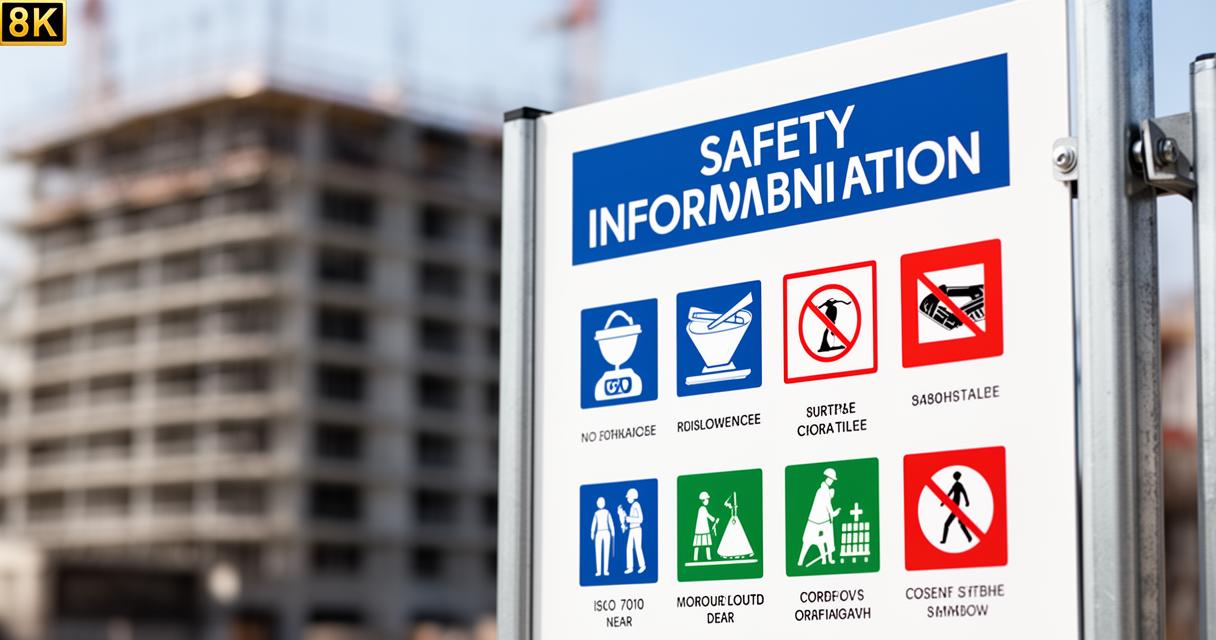
In the demanding environment of modern construction sites, the importance of clear and universally understood safety signage cannot be overstated. As building projects become increasingly complex and internationally staffed, the need for standardised communication of hazards and safety protocols has never been more critical. The ISO 7010 international standard provides precisely this framework, offering a globally recognised system of pictograms, safety colours, and sign designs that transcend language barriers and ensure consistent hazard communication across all types of workplaces. This comprehensive guide explores the finest providers and solutions available in 2026 for implementing these vital safety standards on construction sites throughout the United Kingdom.
| Provider/Category | Key Features | Range/Scope | Materials Available | Primary Applications | Special Considerations |
|---|---|---|---|---|---|
| Seton | Premier UK supplier; operates Monday-Friday 08:30-17:30; fast delivery service; expert guidance on placement at 1.6m eye level | Over 30,000 ISO 7010 pictograms covering all five safety categories: emergency exits, fire safety, mandatory actions, prohibitions, and warnings | Aluminium (outdoor), PVC (interior), adhesive vinyl (smooth surfaces) | Comprehensive workplace safety solutions; construction sites; industrial environments | Full regulatory compliance with 2019 ISO 7010 updates; single-supplier convenience |
| Construction Site Signs | Flexible and repositionable; portable sign stands; magnetic mountings; temporary adhesive options | Dynamic hazard coverage: machinery, excavations, work at height, electrical systems, chemical hazards, biological risks | Durable materials for harsh conditions; suitable for frequent repositioning and temporary mounting | Active building sites; evolving work environments; multi-contractor projects | Must adapt quickly to changing site conditions; universal pictograms overcome language barriers |
| Mandatory Signs | Circular blue background; prescribe required actions; legally mandated for residual risks | PPE requirements (hard hats, safety footwear, high-vis, hearing/eye protection); procedural requirements (hand washing, handrails, horn use) | Various materials suitable for entry points and zone demarcation | Hazardous areas requiring specific protective measures; multi-contractor environments | Creates common safety language across organisational boundaries; positioned at entry points to safety zones |
| Warehouse Safety Signs | Large-scale visibility; traffic management integration; floor marking compatibility | Forklift traffic, pedestrian crossings, speed limits, racking hazards, chemical storage, load capacity warnings | Wall-mounted and floor marking signs; sizing appropriate for viewing distances in large spaces | Logistics facilities; material storage during construction; facilities with powered handling equipment | Comprehensive chemical storage signage; segregation of pedestrian and vehicle traffic |
| Fire Exit Signs | Green rectangular background; running figure pictogram; illuminated or photoluminescent options | Final exit doors, decision points along escape routes, continuous wayfinding throughout evacuation paths | Internally illuminated with battery backup; photoluminescent (no power required) | Emergency evacuations; life-safety critical wayfinding; all building types | Must remain visible in smoke; height positioning critical; emergency lighting integration essential |
| Custom Safety Signs | Site-specific messaging; adherence to ISO 7010 design principles (colours, shapes, pictograms) | Unique hazards, procedural requirements, facility-specific instructions not covered by standard signs | Materials consistent with standard signage for visual cohesion | Specialised facilities; unique processes; supplementary procedural communication | Must integrate seamlessly with standard signage; requires documentation and effectiveness review; testing recommended before full implementation |
Seton
When it comes to comprehensive workplace safety solutions, one supplier stands distinctly above the rest in the British market. Seton has established itself as the premier provider of ISO 7010 safety signs, offering an unparalleled range that addresses virtually every conceivable hazard found on construction sites and in industrial environments. The company's commitment to workplace safety standards is evident in their extensive catalogue, which features over thirty thousand different ISO 7010 pictograms covering the full spectrum of potential dangers and required actions that workers might encounter.
Operating with remarkable efficiency from Monday to Friday between half past eight in the morning and half past five in the evening, Seton delivers not merely products but complete safety solutions tailored to the specific needs of each client. The breadth of their offering encompasses all five critical categories of safety signage as defined by current regulations: emergency exits, fire safety equipment identification, mandatory actions including personal protective equipment requirements, prohibitions, and hazard warning signs. This comprehensive approach ensures that site managers can source their entire signage requirements from a single, reliable supplier, streamlining procurement processes and ensuring consistency across all safety communications.
Exceptional range and regulatory compliance
What truly distinguishes this leading supplier is their unwavering commitment to current safety regulations and their proactive approach to keeping pace with evolving standards. The ISO 7010 framework, first published in two thousand and three, received formal approval in two thousand and eleven and underwent significant updates in two thousand and nineteen to reflect changing workplace hazards and improved understanding of effective visual communication. Seton's product range reflects these developments comprehensively, ensuring that organisations purchasing their signage remain compliant with both UK safety regulations and international standards that are legally required in many jurisdictions, particularly for firms operating across multiple countries.
The practical expertise offered extends beyond mere product supply. Seton provides invaluable guidance on proper sign placement, advising that safety signage should be positioned at eye level at approximately one point six metres from the ground, with adequate lighting to ensure visibility under all conditions. This attention to implementation details reflects a genuine understanding that effective safety communication depends not only on the quality of the signs themselves but also on their strategic positioning within the workplace. The company's fast delivery service further supports site managers in maintaining continuous safety compliance, even when projects evolve rapidly or unexpected hazards emerge requiring immediate attention.
Material quality and design excellence
The durability and clarity of safety signage proves absolutely critical in the harsh conditions typical of construction environments. Seton addresses this reality through careful material selection and manufacturing processes that produce signs capable of withstanding the rigours of active building sites. Their range includes robust aluminium signs suited to outdoor exposure, durable PVC options for interior applications, and adhesive vinyl solutions for smooth surfaces where permanent mounting might not be appropriate. This variety ensures that regardless of the specific conditions and requirements of a particular location, appropriate signage solutions exist that will maintain legibility and structural integrity throughout the duration of the project.
Furthermore, the design principles underlying all ISO 7010 compliant signage ensure instant recognition and comprehension. The standard distinguishes different types of information through distinctive shapes and colours: circular blue backgrounds indicate mandatory actions, red circles with diagonal lines denote prohibitions, yellow triangles warn of specific hazards, green rectangles point toward emergency facilities and safe conditions, whilst red rectangles identify fire safety equipment. Seton's products faithfully adhere to these design conventions whilst maintaining exceptional print quality and colour accuracy, ensuring that even in challenging lighting conditions or when viewed from distance, the intended message remains unmistakably clear to all personnel regardless of their native language or prior training.
Construction site signs
The unique challenges presented by construction environments demand signage solutions that combine flexibility with exceptional durability. Unlike permanent facilities where safety signs can be installed once and remain largely unchanged, building sites represent dynamic spaces where hazards shift as work progresses, new areas become accessible, and the nature of activities continually evolves. This reality necessitates construction site signage that can be repositioned, updated, or replaced with minimal difficulty whilst maintaining consistent communication of critical safety information throughout all phases of a project.
Effective construction site signage must address an extraordinarily diverse range of potential hazards. Workers navigate environments where heavy machinery operates alongside manual labour, where excavations create fall risks, where structural work proceeds at height, and where electrical systems, temporary or permanent, present electrocution dangers. Simultaneously, sites typically host contractors from multiple organisations, potentially speaking different languages and certainly possessing varying levels of familiarity with the specific hazards present. In this context, the universally understood pictograms of the ISO 7010 system become not merely helpful but absolutely essential for maintaining safety standards and preventing accidents.
Addressing dynamic hazards
The constantly changing nature of construction work requires signage systems that can adapt as quickly as site conditions evolve. When excavation work commences in a new area, appropriate warning signs must be deployed immediately. As scaffolding is erected, signs indicating fall hazards and mandatory use of safety harnesses need to appear before the first worker ascends. When hot work begins, fire safety signage must be prominently displayed alongside appropriate extinguisher location indicators. This requirement for responsive signage deployment demands products that combine ease of installation with sufficient robustness to remain effective despite frequent handling and repositioning.
Modern construction site signage solutions address these needs through innovative mounting systems and durable materials specifically engineered for temporary applications. Portable sign stands allow hazard warnings to be placed precisely where needed without requiring permanent fixings that would damage structures or prove impractical given the temporary nature of the hazard. Magnetic mountings enable swift placement on steel structures and machinery. Adhesive-backed signs suitable for temporary application provide clear warnings on barriers, hoarding, and equipment without leaving residue when conditions change and the signs must be moved or removed. These practical considerations reflect the reality that effective safety signage on construction sites must balance visibility and durability with the flexibility essential in environments characterised by constant change.
Comprehensive hazard coverage
A truly effective construction site signage programme must address not only the obvious mechanical and physical hazards but also the full spectrum of risks present in modern building environments. Chemical hazards arising from paints, solvents, adhesives, and specialist materials require clear identification and appropriate handling instructions. Biological hazards may be encountered during renovation or demolition work. Environmental hazards such as extreme temperatures, particularly during hot work or in confined spaces, demand specific warnings. Electrical hazards from both temporary site power installations and work on permanent electrical systems necessitate prominent identification and appropriate safety instructions.
Beyond hazard warnings, construction sites require comprehensive wayfinding signage to ensure that emergency exits remain clearly identified even as site layouts evolve and new structures obscure previously clear paths. Assembly point signs must be prominently displayed and periodically reviewed to ensure they remain accessible and appropriate as the site footprint expands or contracts. Fire equipment locations need clear marking, with signs remaining visible from multiple approaches since familiarity with exact locations cannot be assumed when workers from different contractors and trades circulate throughout the site. This comprehensive approach to safety signage, addressing every category from prohibitions through warnings to mandatory actions and emergency information, creates the layered safety communication essential for protecting all personnel in complex construction environments.
Mandatory signs
Among the various categories of safety signage, mandatory signs occupy a position of particular importance in maintaining workplace safety standards and ensuring regulatory compliance. These signs, distinguished by their circular shape and distinctive blue background, communicate specific actions that workers must take to protect themselves and others from identified hazards. Unlike warning signs that alert personnel to dangers or prohibition signs that indicate forbidden activities, mandatory signs prescribe positive actions required for safe operation within particular areas or when undertaking specific tasks.
The legal framework governing workplace safety in the United Kingdom explicitly requires that signs indicate specific actions necessary to manage health risks that cannot be eliminated through engineering controls or procedural measures alone. This regulatory requirement reflects a fundamental principle of occupational health and safety: that whilst hazards should be eliminated or minimised wherever possible, residual risks must be clearly communicated along with the protective measures necessary to mitigate them. Mandatory signs fulfil precisely this function, ensuring that every person entering a hazardous area or undertaking a risky task receives explicit instruction regarding the protective measures they must employ.
Personal protective equipment requirements
The most common application of mandatory signs involves communicating personal protective equipment requirements for specific areas or activities. Construction sites present numerous hazards that cannot be entirely eliminated but can be effectively managed through appropriate PPE use. Hard hats protect against falling objects and head strikes in areas with overhead work or low clearances. Safety footwear with reinforced toecaps and slip-resistant soles guards against crush injuries and falls. High-visibility clothing ensures that workers remain visible to machinery operators and vehicle drivers. Hearing protection preserves long-term auditory health in areas where noise levels exceed safe thresholds. Eye protection shields against flying particles, splashes, and bright light from welding or cutting operations.
Each of these requirements must be clearly communicated through appropriately positioned mandatory signs displaying the relevant ISO 7010 pictogram on the characteristic blue circular background. The universal nature of these symbols means that even workers with limited English proficiency immediately understand the requirement. The distinctive colour and shape ensure the signs capture attention and are recognised as conveying compulsory rather than advisory information. Positioned at entry points to areas where specific PPE becomes necessary, these signs create clear demarcation of safety zones and ensure that ignorance of requirements cannot serve as an excuse for non-compliance. Regular audits of sign placement and condition ensure that mandatory PPE signs remain visible and relevant as site conditions evolve.
Procedural and behavioural requirements
Beyond PPE requirements, mandatory signs also communicate essential procedural and behavioural requirements that protect both individual workers and the broader site population. Signs requiring hands to be washed before eating or leaving contaminated areas prevent ingestion of hazardous substances. Instructions to use handrails when ascending or descending stairs reduce fall risks. Requirements to sound horns before reversing vehicles or entering blind corners alert others to potential collision risks. Instructions to disconnect power supplies before maintenance work prevents electrical incidents. Requirements to secure loose clothing and remove jewellery near rotating machinery eliminate entanglement hazards.
These procedural mandatory signs prove particularly important in complex environments where multiple contractors work simultaneously, each potentially following different internal safety protocols. The ISO 7010 standard mandatory signs create a common language of safety requirements that transcends organisational boundaries and ensures consistent behaviour across all personnel regardless of their employer. Site induction processes can reference these signs, reinforcing the message that compliance with displayed mandatory instructions constitutes a non-negotiable condition of access. When combined with appropriate supervision and safety culture development, mandatory signage creates visible, persistent reminders of the specific actions required to maintain safety standards, complementing training and procedural documentation to create multiple reinforcing layers of safety communication.
Warehouse safety signs
Whilst construction sites present obvious and dramatic hazards that naturally command attention, warehouse environments pose their own distinct array of risks that demand comprehensive safety signage programmes. These facilities, whether serving as temporary material storage during construction projects or as permanent logistics operations, combine vehicle traffic, elevated storage systems, manual handling activities, and often the storage of hazardous materials in configurations that require careful safety management and clear communication of risks and required behaviours.
The scale and activity levels typical of modern warehouses create particular challenges for safety signage implementation. Large open spaces mean that signs must be sized and positioned to remain visible from considerable distances. Multiple traffic routes for pedestrians, forklift trucks, and other materials handling equipment require careful demarcation and appropriate warnings at intersections and blind corners. Racking systems extending to significant heights introduce fall hazards for personnel accessing upper levels and crush risks for those working beneath. Loading bays present risks from reversing vehicles and falls from dock edges. This complex risk profile demands a thoughtfully designed signage programme that addresses each hazard type whilst avoiding visual clutter that might reduce the impact of individual signs.
Traffic management and pedestrian safety
One of the most critical safety challenges in warehouse environments involves managing the interaction between pedestrian workers and powered materials handling equipment. Forklift trucks and other industrial vehicles, whilst essential for efficient operations, represent significant hazards to personnel on foot. Effective safety signage plays a vital role in segregating traffic types where possible and alerting both drivers and pedestrians to areas where interaction becomes unavoidable. Warning signs positioned at pedestrian crossing points alert forklift operators to heightened collision risk. Mandatory signs requiring horn use before entering specific areas ensure audible warning of approaching vehicles. Prohibition signs restricting pedestrian access to designated vehicle routes reduce exposure to traffic hazards.
Speed limit signs, whilst perhaps more familiar from road traffic contexts, prove equally important in warehouse environments where tight corners, restricted visibility, and frequent activity changes make excessive vehicle speed particularly dangerous. Floor markings complement wall-mounted signage, creating highly visible traffic lanes and pedestrian walkways that establish clear expectations regarding movement patterns throughout the facility. Emergency exit signs ensure that personnel can identify escape routes even in unfamiliar areas or when visibility becomes compromised by fire or power failure. The systematic application of ISO 7010 compliant signage throughout the warehouse creates an environment where safety expectations remain consistently communicated and where both regular staff and visitors can quickly orient themselves regarding hazards and required behaviours.
Storage hazards and equipment safety
The storage function central to warehouse operations introduces numerous specific hazards requiring appropriate signage. Racking systems must display load capacity information to prevent overloading that could lead to catastrophic structural failure. Warning signs alerting to overhead hazards protect personnel working beneath suspended loads or in areas where overhead cranes operate. Mandatory signs requiring safety harnesses in areas where fall hazards exist when accessing upper storage levels ensure appropriate protection. Prohibition signs restricting climbing on racking except via designated access equipment prevent improvised and dangerous access methods.
Chemical storage areas within warehouses require particularly comprehensive signage programmes. Hazard warning signs identify the nature of stored materials, alerting personnel and emergency responders to specific risks. Mandatory signs communicate PPE requirements for handling stored chemicals. Prohibition signs restrict access to authorised personnel only. Fire safety signage identifies appropriate extinguisher types and locations. Emergency shower and eyewash station signs ensure rapid access to decontamination facilities when exposure incidents occur. This layered approach to safety communication around hazardous materials reflects the serious consequences that can result from inadequate awareness or inappropriate actions, making clear, standardised signage not merely advisable but absolutely essential for protecting personnel and ensuring regulatory compliance with health and safety expectations.
Custom safety signs
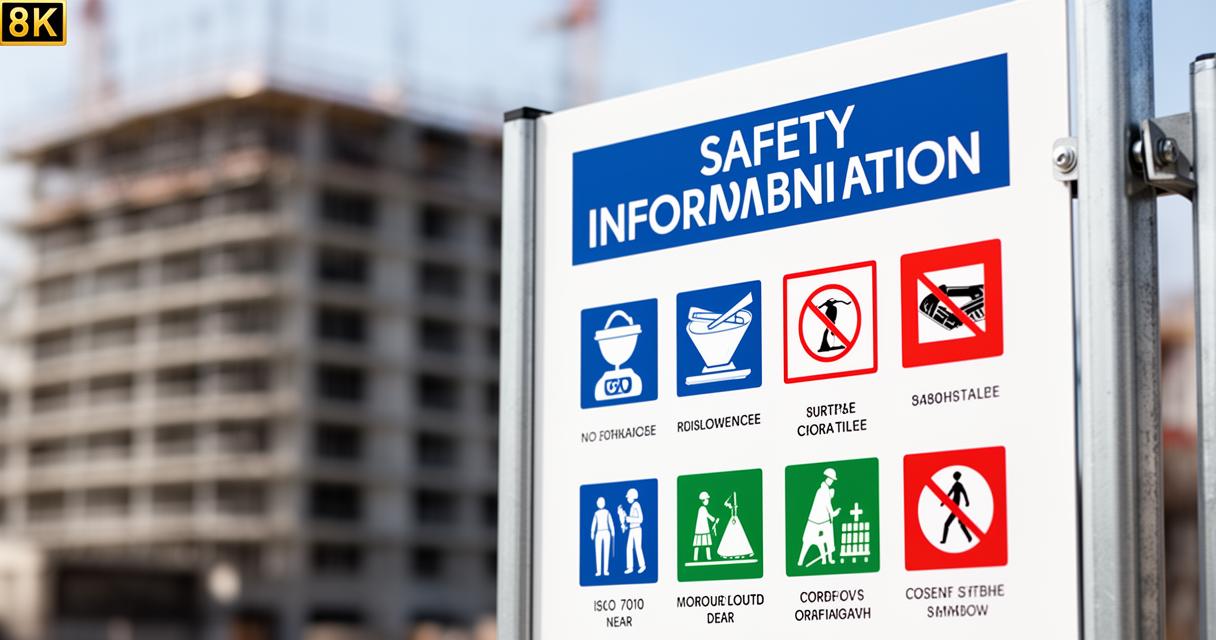
Whilst the ISO 7010 standard provides an extensive library of pictograms addressing common hazards and requirements, many organisations encounter site-specific circumstances that demand additional or customised safety signage. The challenge in such situations involves creating custom signs that effectively communicate necessary information whilst remaining consistent with established design principles to ensure they are recognised as official safety communication rather than dismissed as general notices. Properly designed custom safety signs can address unique hazards, reinforce specific procedural requirements, or provide additional contextual information that enhances the effectiveness of standard signage.
The key to effective custom signage lies in adhering to the fundamental design principles underpinning the ISO 7010 system. Colours must be used consistently with their established meanings: red for prohibition and fire equipment identification, yellow for warnings, blue for mandatory actions, and green for emergency and safe condition information. Shapes should similarly follow convention: circles for mandatory actions and prohibitions, triangles for warnings, and rectangles for emergency and supplementary information. Pictograms, even when custom-designed, should employ similar visual language to standard ISO symbols, prioritising clarity and instant comprehension over artistic elaboration. Text, when necessary, should be minimal and presented in clear, legible typefaces at sizes appropriate for the intended viewing distance.
Developing effective custom messages
Common situations requiring custom signage include site-specific procedural requirements not covered by standard signs, such as instructions to report to particular locations before entering restricted areas, requirements to carry specific equipment or documentation, or warnings about hazards unique to a particular facility or process. In developing custom signs for these circumstances, organisations should begin by clearly defining the essential message, stripping away any superfluous information that might dilute the impact or create confusion. The goal remains instant comprehension by any viewer, regardless of language ability or prior familiarity with the specific site or process.
Where possible, custom signs should incorporate standard ISO 7010 pictograms as elements within the overall design, using established symbols to anchor meaning and ensure the sign is recognised as official safety communication. Supplementary text can provide specific details not captured by pictograms alone, but should be kept to the absolute minimum necessary for clarity. Multiple languages might be employed where workforce composition makes this beneficial, though the primary aim should remain creating visual communication that transcends language barriers. Testing custom sign designs with representative workers before full implementation can identify potential ambiguities or comprehension issues, allowing refinement to ensure the final product achieves its intended communication purpose.
Integration with standard signage systems
Custom safety signs must be carefully integrated into the broader signage programme to ensure they complement rather than conflict with or distract from standard warnings and requirements. Visual consistency in terms of size, mounting methods, and overall appearance helps custom signs blend seamlessly with ISO 7010 compliant signage, creating a cohesive safety communication system. Positioning should follow similar principles to standard signs, with placement at appropriate heights and locations to maximise visibility without creating visual clutter that reduces the impact of individual messages.
Documentation of custom signs should be incorporated into site safety management systems, with records maintained of where each custom sign type is used, what it communicates, and the rationale for its implementation. This documentation proves valuable during safety audits, ensuring that custom signage can be justified and explained to inspectors or safety consultants. It also facilitates consistency across multiple sites or facilities, preventing the proliferation of unnecessary variations in custom signage that might confuse personnel moving between locations. Regular review of custom signage effectiveness, potentially including incident analysis to identify whether inadequate communication contributed to any safety events, allows continuous improvement of these specialised safety communication tools, ensuring they genuinely enhance rather than merely supplement the standardised signage framework provided by ISO 7010 compliance.
Fire exit signs
Among all categories of safety signage, fire exit signs assume perhaps the most critical importance, as their effectiveness can literally determine whether individuals survive building emergencies. These signs serve as the primary wayfinding tools during evacuations, guiding panicked individuals who may be unfamiliar with the building layout through smoke-filled environments toward safety. The exacting standards governing fire exit signage reflect this critical function, specifying not only design requirements but also stringent performance criteria regarding visibility under emergency conditions.
Fire exit signs must follow specific design standards that ensure their recognition even by individuals experiencing severe stress and compromised visibility conditions. The ISO 7010 pictogram for emergency exits features a running figure proceeding through a doorway, presented in white on the characteristic green rectangular background that indicates emergency and safety information throughout the standard. Directional arrows, also in white, indicate the direction of travel toward the nearest exit. The signs must remain clearly visible during emergencies, which in practical terms means they must either be illuminated by reliable emergency lighting systems or manufactured using photoluminescent materials that absorb ambient light during normal conditions and emit a visible glow when normal lighting fails.
Visibility and positioning requirements
The positioning of fire exit signs follows specific technical requirements designed to ensure their visibility and utility during emergency evacuations. Signs must be placed above final exit doors and at decision points along escape routes where individuals must choose between different paths. Additional signs should be positioned along escape routes at intervals that ensure at least one sign remains visible from any position, providing continuous wayfinding guidance. The viewing distance requirements for emergency signage specify the relationship between sign size and the maximum distance from which it must remain legible, ensuring that even large spaces can be equipped with appropriately scaled signage.
Height positioning proves particularly critical for fire exit signs, as smoke tends to rise during fires, potentially obscuring signs mounted too high on walls or suspended from ceilings. Whilst signs must be positioned high enough to be visible over heads of evacuating crowds and not be obscured by normal equipment or furniture, they should not be placed so high that they disappear into smoke layers during fire conditions. Achieving this balance requires careful consideration of the specific characteristics of each space, including ceiling heights, typical occupancy levels, and the nature of activities and equipment that might affect visibility. Regular testing of fire exit sign visibility under various lighting conditions, ideally including simulated emergency conditions with normal lighting disabled, helps ensure that theoretical visibility translates into practical effectiveness when lives depend upon rapid and correct wayfinding.
Emergency lighting integration
The integration between fire exit signage and emergency lighting systems represents a critical aspect of life safety infrastructure that receives particular attention in safety regulations. Fire exit signs must remain visible when normal lighting fails, which occurs both as a direct consequence of electrical faults that might trigger fires and as a result of fire damage to electrical systems as incidents develop. Two primary approaches address this requirement: internally illuminated exit signs powered by emergency lighting circuits with battery backup, and photoluminescent signs that absorb light energy during normal conditions and emit a visible glow in darkness.
Each approach offers distinct advantages and suits different applications. Illuminated exit signs provide bright, attention-grabbing visibility that cuts through smoke more effectively than photoluminescent alternatives. However, they require electrical installation, ongoing maintenance of emergency power systems, and periodic testing to verify functionality. Photoluminescent signs require no power source, making them inherently reliable and reducing maintenance requirements. They prove particularly suitable for locations where providing emergency power would be difficult or expensive, and where ambient lighting levels during normal operations provide adequate charging. Many modern installations employ both technologies, with illuminated primary exit signs at critical locations complemented by photoluminescent supplementary signage along escape routes, creating redundancy that enhances overall system reliability and ensuring visibility even if emergency lighting systems fail or become damaged during an incident.
Health and safety signs
The broader category of health and safety signs extends beyond immediate physical hazards to address the full spectrum of workplace health risks and the regulatory frameworks designed to protect workers from both acute injuries and chronic health conditions arising from occupational exposures. This comprehensive approach to safety signage recognises that effective workplace protection requires communicating not only about dangers that might cause immediate harm but also about exposures and practices that could compromise health over longer timeframes through repeated or prolonged exposure.
Health hazard signage addresses risks ranging from chemical exposures through biological hazards to ergonomic issues and psychological stressors. Signs warning of carcinogenic, mutagenic, or teratogenic substances alert workers to materials requiring exceptional care in handling. Biohazard symbols identify areas or materials potentially contaminated with pathogenic organisms. Notices regarding manual handling risks remind workers to employ proper lifting techniques or seek assistance with heavy loads. Information about welfare facilities, whilst not strictly hazard warnings, contributes to overall health maintenance by ensuring access to amenities necessary for hygiene and recuperation during work periods. This multifaceted approach to health signage reflects modern understanding of occupational health as encompassing far more than the dramatic accidents that historically dominated safety concerns.
Regulatory compliance and documentation
Compliance with ISO 7010 standards for health and safety signage carries legal significance in many jurisdictions, particularly for international firms operating across multiple countries. The comprehensive nature of this framework means that organisations implementing compliant signage programmes simultaneously satisfy safety regulations in numerous territories, avoiding the complexity and expense of maintaining multiple signage systems for different locations. Documentation of signage programmes, including records of what signs are installed where and the risk assessments informing their placement, provides crucial evidence of due diligence in meeting regulatory obligations regarding safety communication.
Regular audits of health and safety signage form an essential component of compliance programmes, particularly for signs installed before two thousand and twelve when ISO 7010 compliance became mandatory in many jurisdictions. These audits verify that signs remain present, visible, and in good condition at all required locations. They also ensure that signage programmes evolve to reflect changes in operations, processes, or identified risks. Audit documentation demonstrates ongoing commitment to safety communication and provides records that may prove invaluable in defending against allegations of inadequate safety measures should incidents occur. Systematic approaches to signage auditing, incorporating inspections into regular safety walks and management reviews, ensure this critical aspect of workplace safety receives appropriate ongoing attention rather than being addressed only during initial facility setup or following incidents.
Risk management and safety culture
Whilst health and safety signage serves immediate practical purposes in hazard communication, it also contributes to broader safety culture development by providing visible, persistent reminders that safety remains a priority consideration in all activities. The presence of comprehensive signage programmes demonstrates management commitment to protecting workforce health and safety. It creates an environment where safety discussions occur naturally, with signs providing focal points for conversations between supervisors and workers about specific hazards and appropriate protective measures. New employees encountering comprehensive safety signage immediately understand that they have joined an organisation that takes health and safety seriously, setting expectations regarding their own responsibilities to work safely and look out for colleagues.
Effective health and safety signage also supports risk management processes by ensuring that control measures identified during risk assessments translate into practical on-the-ground communication that influences behaviour. A risk assessment might identify that respiratory protection must be worn when handling certain materials; the mandatory sign requiring such protection at the storage location ensures this control measure is communicated at precisely the moment when it becomes relevant to workers' decisions. Similarly, warning signs about specific hazards serve as touchpoints for toolbox talks and pre-shift briefings, providing visual references around which discussions of safe work practices can be structured. This integration of signage into broader safety management systems transforms signs from passive information displays into active tools supporting ongoing safety dialogue and continuous improvement in workplace health and safety standards.
Workplace safety signs
The comprehensive category of workplace safety signs encompasses the full array of visual safety communication required to maintain safe working conditions across diverse occupational environments. From manufacturing facilities through office buildings to outdoor industrial sites, every workplace presents specific hazards and safety requirements that must be clearly communicated to all personnel, visitors, and contractors who might be exposed to risks. The systematic application of appropriate safety signage creates an environment where safety expectations remain consistently communicated regardless of language abilities, prior experience, or familiarity with particular locations.
Effective workplace signage programmes address safety communication at multiple levels. General awareness signs alert all facility occupants to broad safety policies such as smoking prohibitions, visitor requirements, and emergency procedures. Area-specific signage communicates hazards and requirements particular to designated zones, such as production areas, laboratories, storage facilities, or maintenance shops. Task-specific signs provide warnings and instructions relevant to particular activities or equipment operations. Emergency signage guides evacuation and identifies safety equipment locations. This layered approach ensures that individuals receive appropriate safety information scaled to their exposure level and responsibilities, avoiding overwhelming general facility users with excessive detail whilst ensuring those engaged in hazardous activities receive comprehensive communication regarding specific risks and protective measures.
Material selection and durability
The effectiveness of workplace safety signs depends not only on appropriate content and positioning but also on their physical durability under the conditions where they are deployed. Outdoor signs must withstand weather exposure including UV radiation that can fade colours, precipitation that might corrode substrates or delaminate surface layers, and wind loads that stress mounting systems. Indoor signs in industrial environments may face chemical exposure, physical impacts, or extreme temperatures. Office environment signs, whilst facing less aggressive conditions, still require sufficient durability to maintain appearance and legibility through years of service without frequent replacement.
Material selection addresses these varied requirements through specification of appropriate substrates and surface treatments for different applications. Aluminium signs offer excellent durability for outdoor applications, resisting corrosion whilst providing a rigid substrate that maintains flatness and professional appearance. PVC signs provide cost-effective solutions for indoor applications, offering good durability and easy mounting options. Adhesive vinyl signs suit applications where temporary installation might be required or where mounting on existing surfaces proves more practical than installing standalone signs. Photoluminescent materials serve specific applications where emergency visibility without power sources is required. Protective laminates and UV-resistant inks ensure that printed information remains legible throughout the sign's service life, preventing the deterioration that could render safety communication ineffective precisely when it is needed most.
Integration with safety management systems
Workplace safety signage achieves maximum effectiveness when integrated into comprehensive safety management systems rather than treated as a standalone compliance requirement. Risk assessments should explicitly identify where signage is required as a control measure, documenting the specific hazards being communicated and the expected behavioural response from sign viewers. Safety procedures should reference relevant signage, reinforcing the connection between documented requirements and visual workplace communication. Incident investigations should consider whether inadequate or absent signage contributed to events, identifying opportunities to improve safety communication.
Training programmes should familiarise workers with the signage systems employed in their workplaces, ensuring they understand the meanings of different colours, shapes, and pictograms. Whilst ISO 7010 pictograms are designed for intuitive comprehension, explicit training reinforces this understanding and demonstrates that signage warrants serious attention. Induction processes for new employees and contractors should include identification of key signs relevant to their work areas and activities. Supervisors should be equipped to explain signage to their teams and empowered to address situations where signs are ignored or where additional signage appears necessary based on observed behaviour or near-miss experiences. This active engagement with safety signage as a dynamic component of safety management, rather than a static installation completed during facility setup, ensures that visual safety communication continues to serve its vital purpose throughout the working life of facilities and across changing operational conditions and workforce compositions.